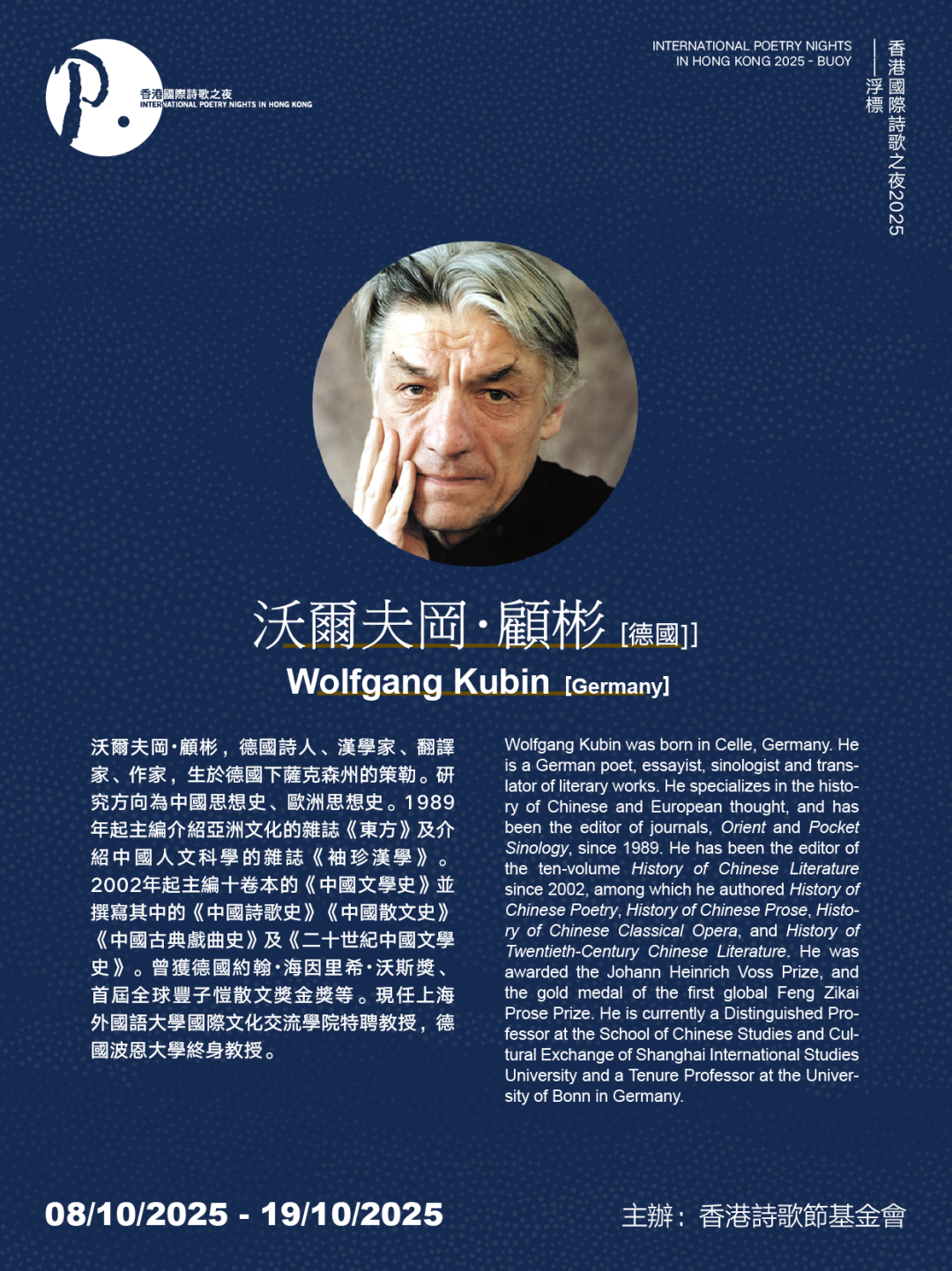
「浮標」香港國際詩歌之夜2025 嘉賓預告丨沃爾夫岡・顧彬



米拉多鲁
[德] 沃尔夫冈·顾彬
欧建梆 译 胡桑 校
我们不也曾是白腰雨燕,
飞向未知的香料群岛?
今日我们围坐一圈,凝望着,
一如迷失海上的卢西塔尼亚人。
啊,你,近在咫尺的澳门、妈阁,在悬崖上,
你也守望着我们更遥远的眷念,
那曾是我们骋目远眺的水天一色,
如今却被片片筹码迷惑,
来自威尼斯的撑船人,
来自澳门的情困女子,
而我们,在忧伤中耐心坐着,凝望着。
“美丽远景”这词,早就让人难以启齿。
我们蹲坐着,思索那白色之城,
为何红瓦,在闪烁不定的光中,
仅呈现白色?莫非是它,一只勇敢的候鸟,
在受祝福的萨乌达德里,胡椒仍为我们幸福地生长?
白腰雨燕:一种燕子,最早由葡萄牙人在寻找香料群岛的航程中发现。妈阁:澳门的名称来自“妈阁”,意为妈祖的岩石。“美丽远景”:Bella Vista,澳门的一座古老建筑,现为葡萄牙领事馆。白色之城:里斯本。红瓦屋顶在强烈阳光下看来如同白色。米拉多鲁(Miradouro):眺望点,可远望大海,满载着昔日海权争夺中失落的乡愁──可见于里斯本与澳门。萨乌达德(Saudade):葡语,葡萄牙人对逝去大海的思念之情。今日的澳门:六十间赌场与来自俄国的妓女,风格模仿威尼斯。
Miradouro
Wolfgang Kubin
Weren’t we also Pacific swifts,
on our way to the unknown islands of spice?
Today we sit in a circle and see
like a Lusitanian on a lost sea.
Ah, you, close Macau, Ama, on the cliff,
you also watch over our more distant longing,
which we saw freely once across the waters
and which are now dazzled by chip upon chip,
from gondoliers from Venice,
from love-weary ladies from Macau,
and we, patient in sorrow, sit and see.
Long have we said “Bella Vista” no more.
We crouch and wonder about the white city,
why its red tiles, in blazing light,
look only white. Is it itself, a brave migratory bird,
where, blessed saudade, pepper still blissfully grows for us?
Pacific swifts, a type of swallow, were first recorded by the Portuguese during their search for the Spice Islands. Ama: The name of Macao (also spelled Macau) derives from Ama Gao, the rock of the goddess Ama. Bella Vista: An old building in Macao, today the Portuguese Consulate. White city: Lisbon, whose red-tiled roofs can appear white. Miradouro: A vantage point offering a nostalgic view over the sea—lost in the battle for maritime supremacy—found in both Lisbon and Macau. Saudade: Portuguese longing over the seas now lost. Today’s Macau: Sixty casinos and Russian courtesans, styled after Venice.
Translated from German by James Au
特里尔,或再一次于神秘玫瑰
[德] 沃尔夫冈·顾彬
欧建梆 译 胡桑 校
为何我今天未能再度找到
曾在此处找到的?
那十二瓣玫瑰,翩然降落,
深处有罕见的坚韧。
那里,石头化作活生生的玫瑰,
我变成你,你变成我。
那里,我们也沉沦于蜕变,
直至耗尽我们周身的黑暗。
那时的雨,如今只余灰色。
我独自前来,你目光不再。
于是我站在荒废之地,
我沉思我命之所趋:
我将来如何,尚未显明。
啊,你若不在,这大地还存余什么?
特里尔圣母教堂的平面图即为十二瓣的神秘玫瑰(Rosa Mystica)。活生生的玫瑰:参见亚里斯多德(西元前384–322)之潜能与实现理论。我们将来如何,尚未显明:参见《新约圣经》约翰一书3章2节。
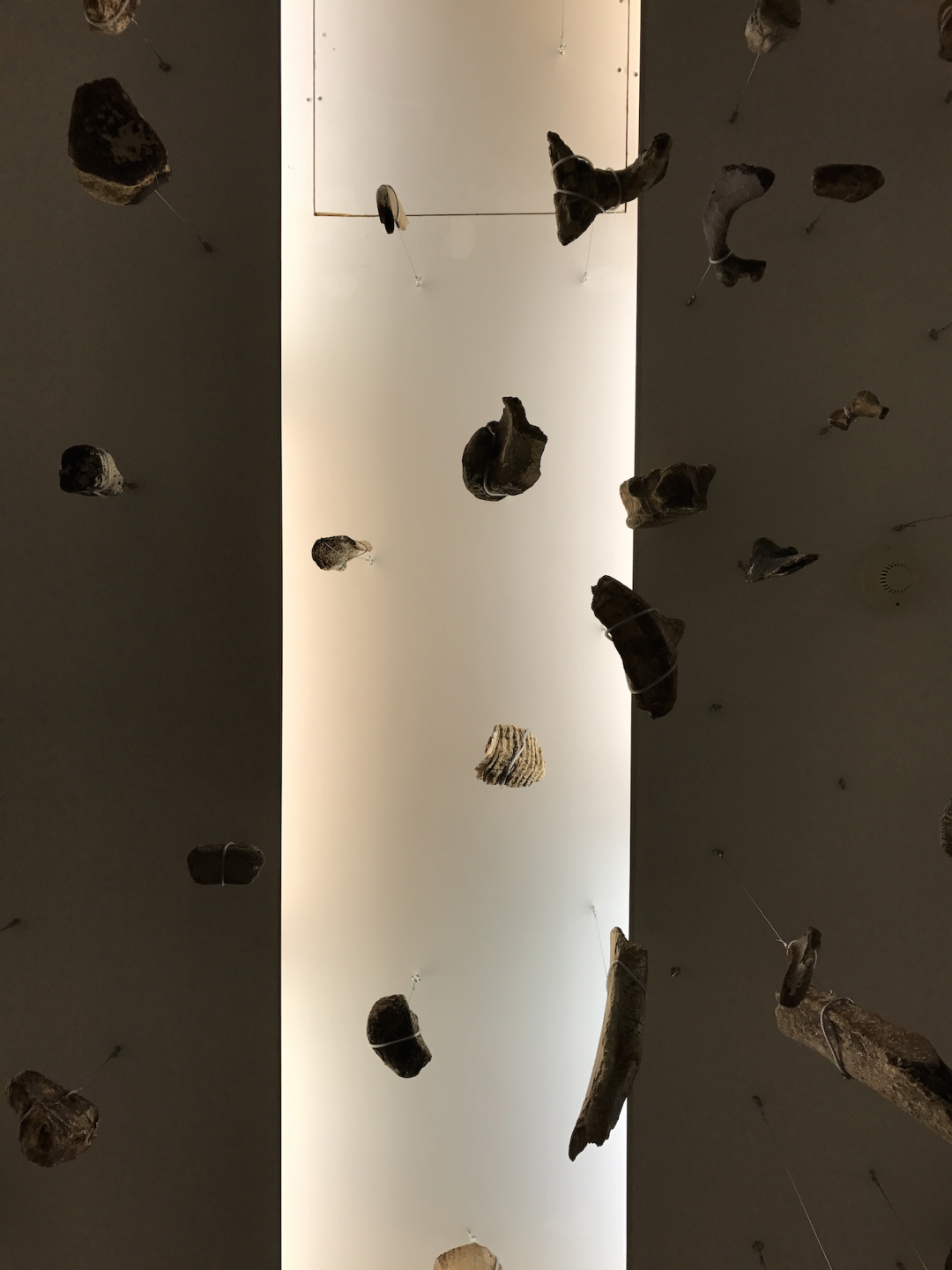
历史的试炼 ©摄影:朱德华
Photo: Testing the History 歷史的試煉 ©Almond Chu
Trier or Still Once on Rosa Mystica
Wolfgang Kubin
Why did I not find again today,
what once I found here?
The twelve-petal rose, descending,
held rare persistence at its core.
There the stone became the living rose,
I became you and you became me.
There too we became slaves to metamorphosis
until all the darkness drained around us.
In the past, the rain; today, only grey.
I came alone — your gaze was gone.
Thus I stood in a deserted place
and idly reflected on my fate:
What we are to be is yet to appear.
Ah, what remains of this earth without you?
The layout of the Liebfrauenkirche in Trier follows the twelve-petal Rosa Mystica. Living rose: in comparison with Aristotle’s (384–322 BCE) theory of potentiality and actuality. What we are to be is yet to appear: NT, 1 John 3:2.
Translated from German by James Au
“香港国际诗歌之夜”(IPNHK)是诗人北岛于二〇〇九年创办的国际诗歌节。IPNHK十六年来已成功传递了来自三十多个国家及上百位知名国际诗人的诗歌及思想,成为了亚洲最具影响力的诗歌盛事之一,也是国际诗坛上最成功的诗歌活动之一。IPNHK是“世界文学联盟”的成员,与该联盟合作并打造世界最领先的诗歌节。